



Elevators Safety Tips
(for elevator passengers)
Below are basic safety tips to ensure that your escalator usage is safe and comfortable.
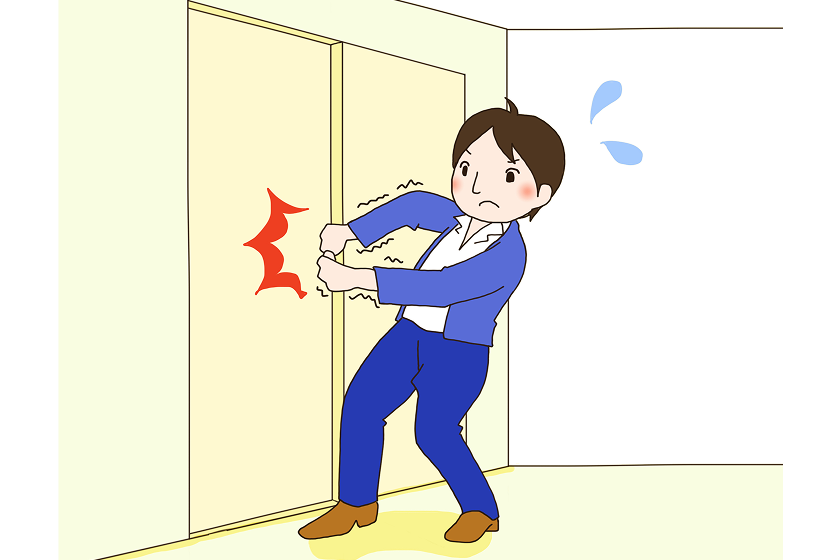
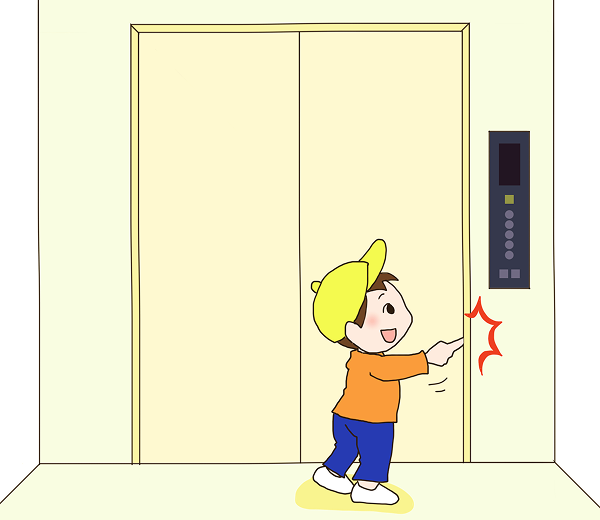
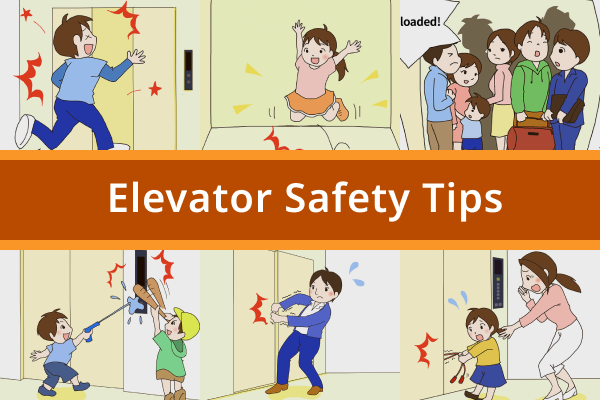
Do not touch the door or try to force it open.
Your hand could get caught by the opening door, or the elevator could come to a sudden stop and you could be trapped inside. You could also fall or be injured.
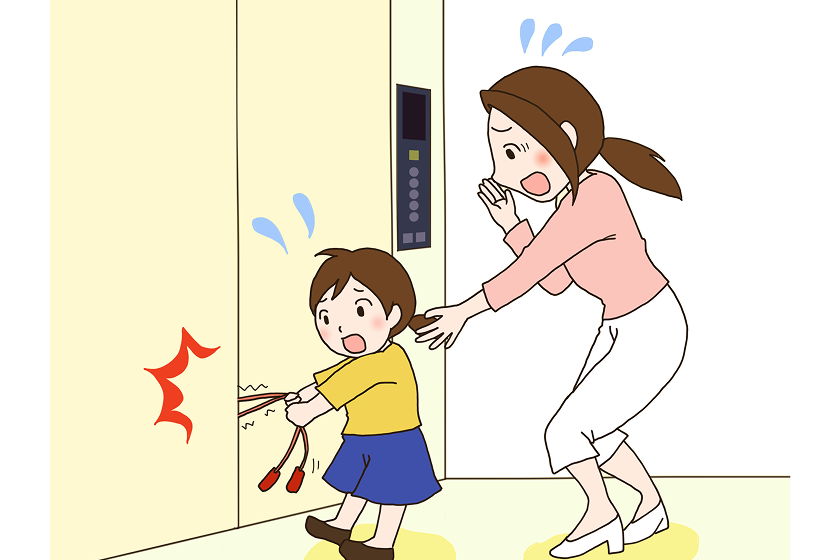
If your clothing or any long, thin accessories (scarves, drawstrings, etc.) get trapped by the door, immediately press the Door Open button and move them away from the door area.
If the elevator starts moving while any clothing or accessories are trapped in the door, this could lead to injury or equipment failure.
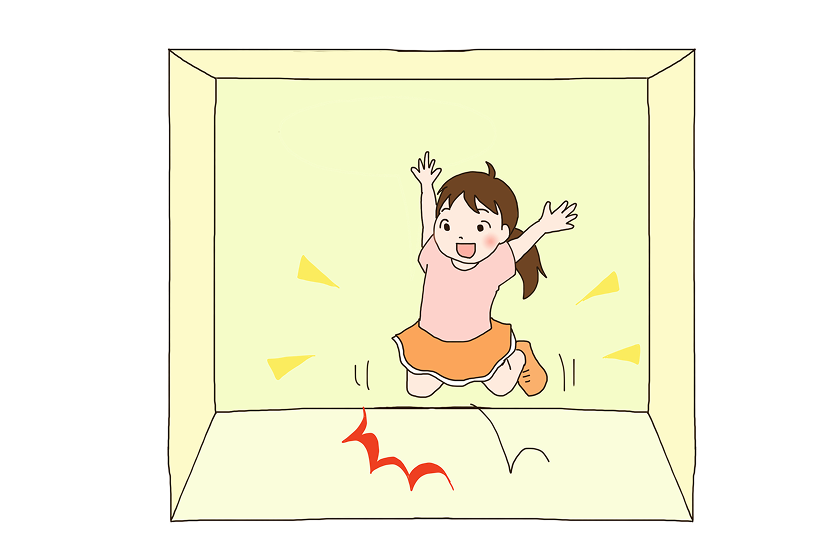
Do not allow young children to play in the elevator. Do not jump in, shake, kick, or strike the elevator. Do not hit the elevator with other objects.
If the elevator car is subjected to any shocks, the safety device may activate, and you could be trapped inside.
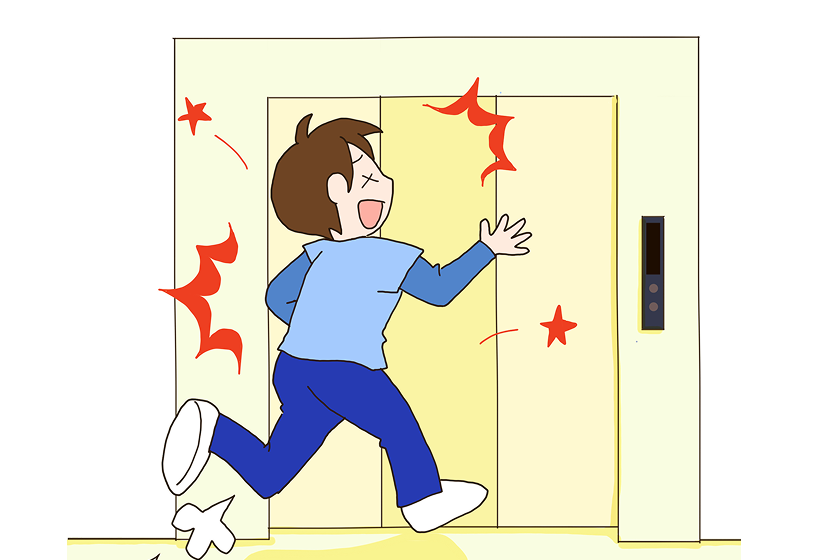
Do not run into the elevator.
This may result in hitting the doors, getting caught, or falling.
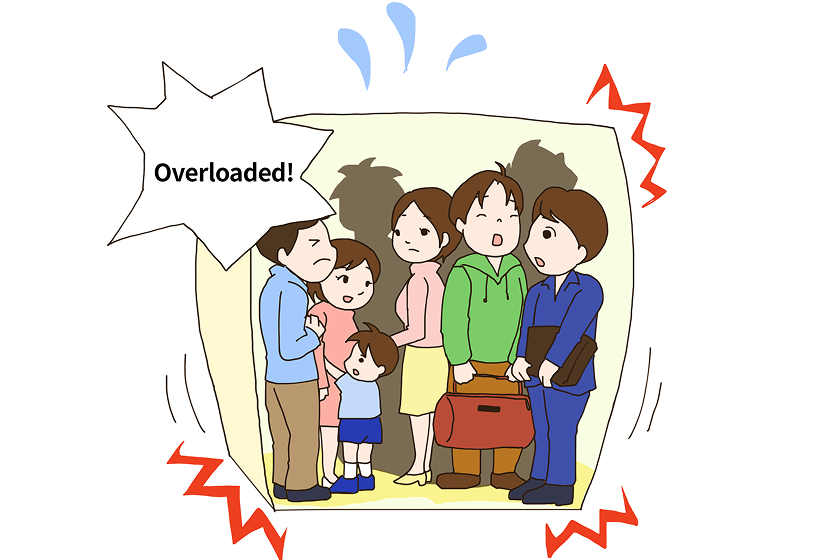
Do not exceed the maximum capacity or load.
Failure to do so could lead to equipment failure. The elevator capacity and weight limit are indicated on the car operation panel in the elevator. If the weight limit is exceeded, you will be notified by an alarm buzzer or a voice message.
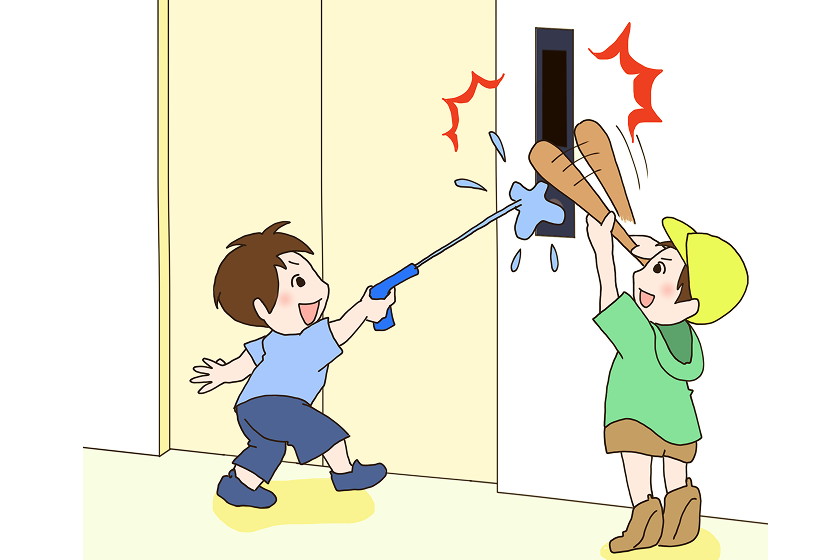
Press the buttons gently. Do not handle them roughly or press them with hard or sharp objects.
Handling buttons or switches roughly could lead to the elevator malfunctioning, and you could get trapped inside.
- 1
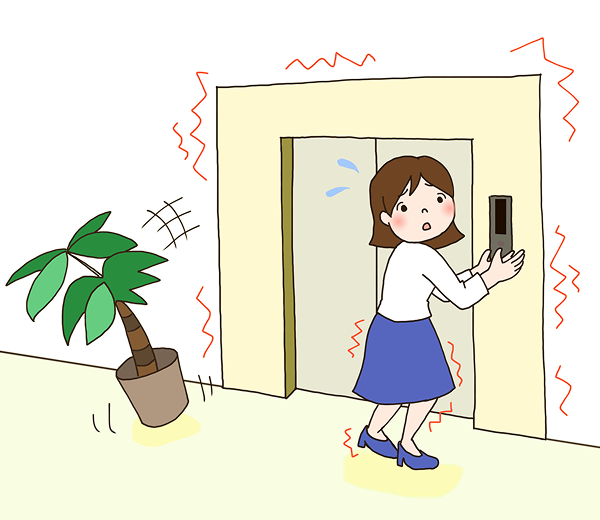
Do not use the elevator in the event of an earthquake.
The elevator may stop between floors, trapping passengers inside and causing secondary hazards.
- 2
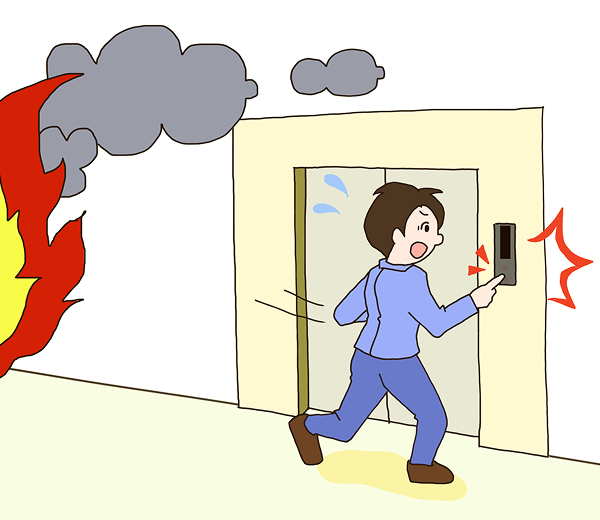
Do not use the elevator in the event of a fire.
Smoke may accumulate inside the elevator, leading to secondary hazards.
- 3
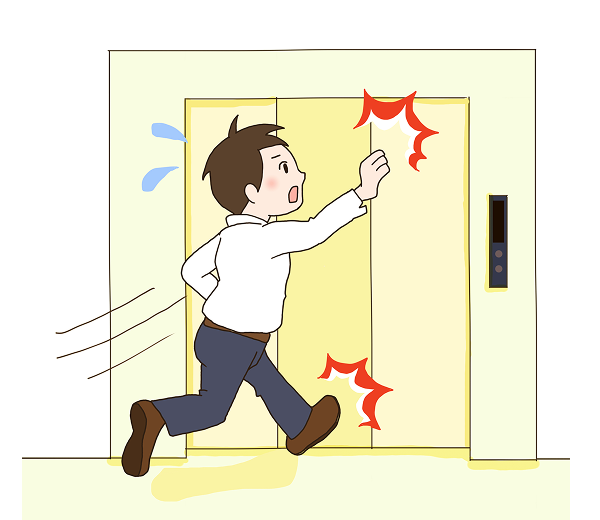
When the door is closing, do not place your hand, arm, body, etc., in the door to prevent it from closing.
You may be caught in the door, leading to injury.
Press the Door Open button to open the door.
- 4
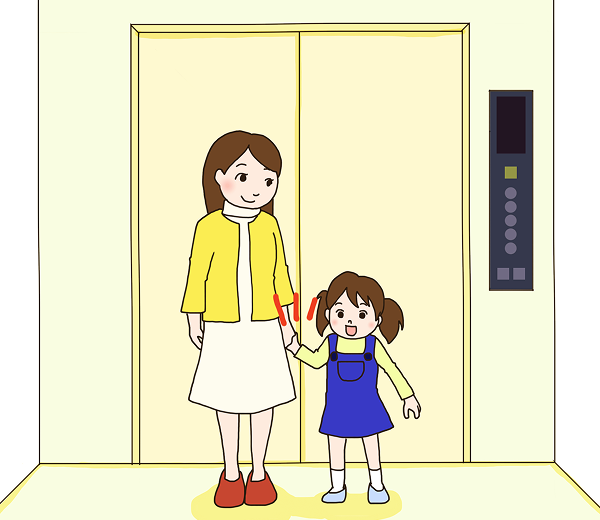
Small children should always be accompanied by an adult on the elevator.
Small children riding an elevator alone could be injured by closing or opening doors or could become trapped inside the elevator because they may not be able to operate the elevator.
- 5
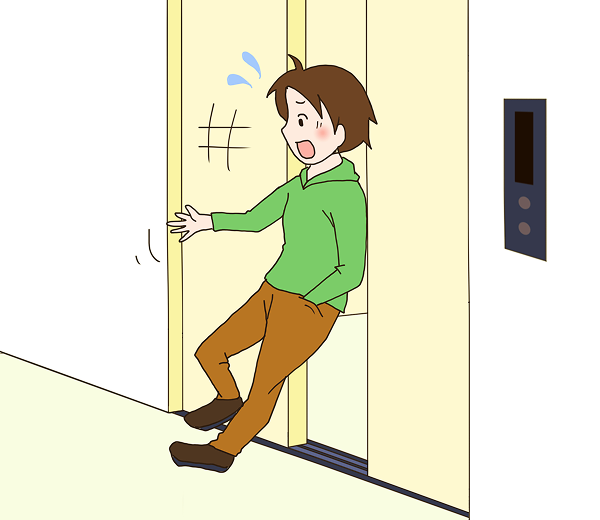
Do not touch the door. Touching the door while it is opening is especially dangerous.
Your hand may be pulled into the doors as they open, resulting in injury.
If you are leaning against the door, you could fall when the door opens.
- 6
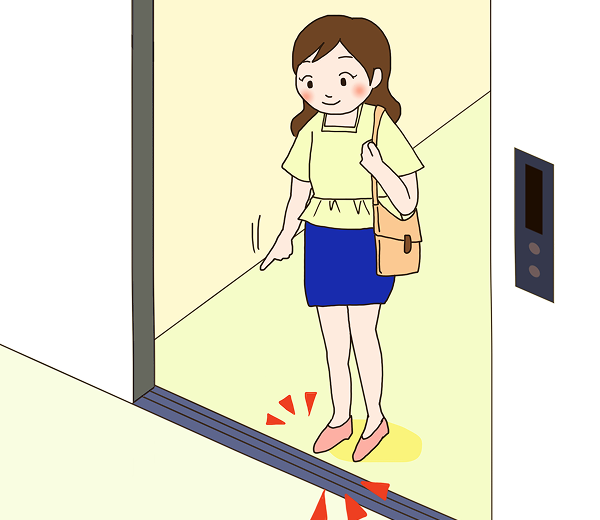
Watch your step when entering or exiting the elevator. Do not enter or exit the elevator while facing backwards.
A step may occur between the elevator car and the landing.Rushing onto or off of the elevator could lead to tripping and falling.
- 7
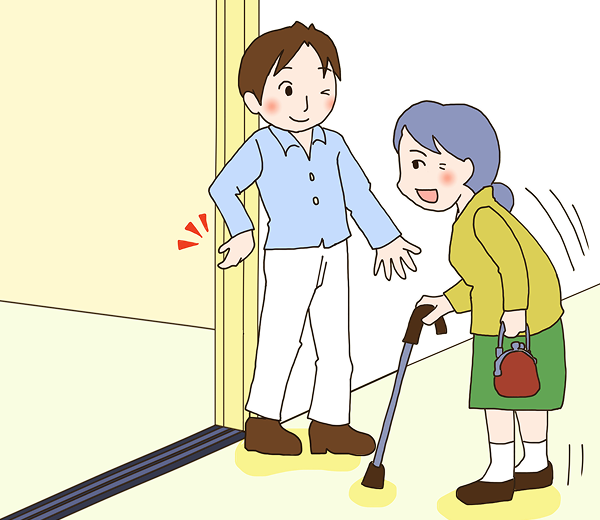
Users who cannot operate wheelchair should always be accompanied by a caretaker. Also, elderly passenger should be accompanied by a caretaker, whenever possible.
Unexpected accidents may occur. Please be cautious of those around you.
- 8
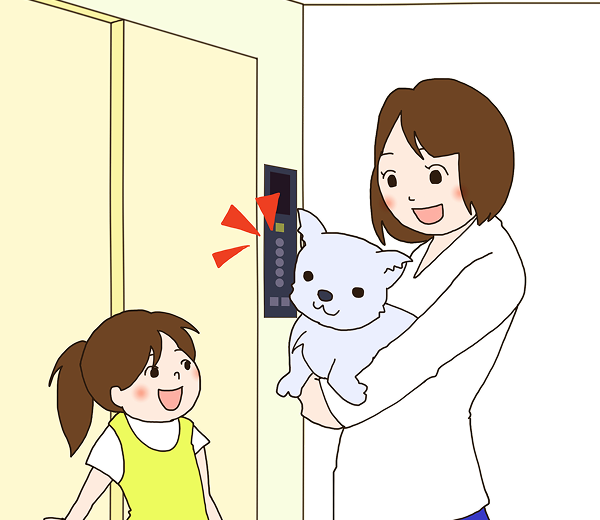
Pets must be placed in a designated carrier or carried in your arms.
If animals are led on a leash while boarding, the leash may be caught in the doors, causing injury or damage.
- 9
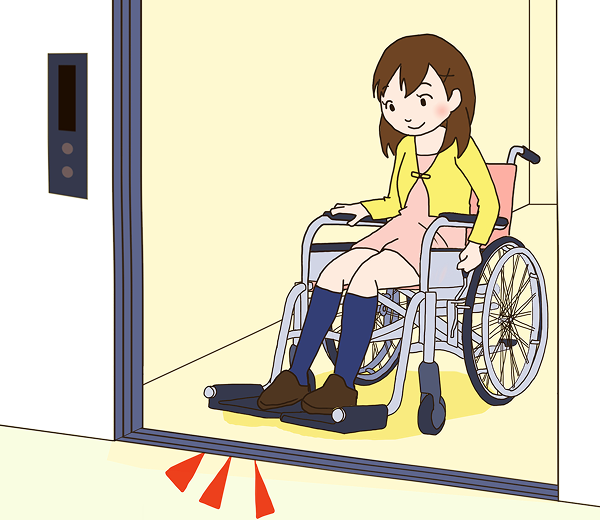
When boarding or exiting in a wheelchair, please proceed slowly. If using a powered wheelchair, set the speed to the lowest setting.
Rushing when boarding or exiting can cause the wheelchair’s wheels to catch on level differences or grooves between the elevator car and the hall, which may lead to falls and injuries.
- 10
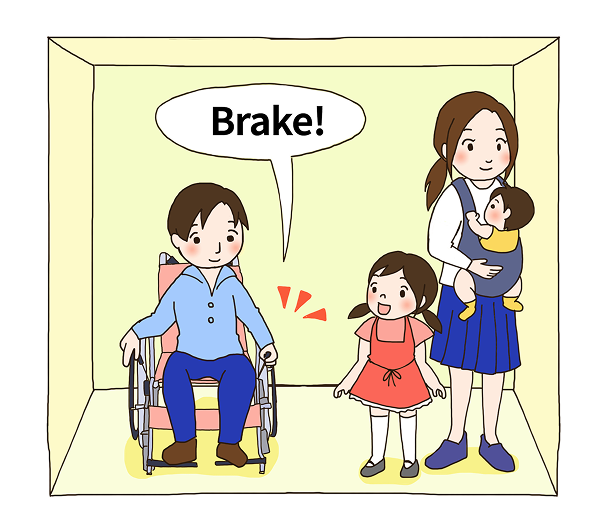
When getting on in a wheelchair, please apply the brakes immediately.
If the brake is not applied, wheelchair may move unexpectedly, causing inconvenience to nearby passengers or leading to falls and injuries.
- 11
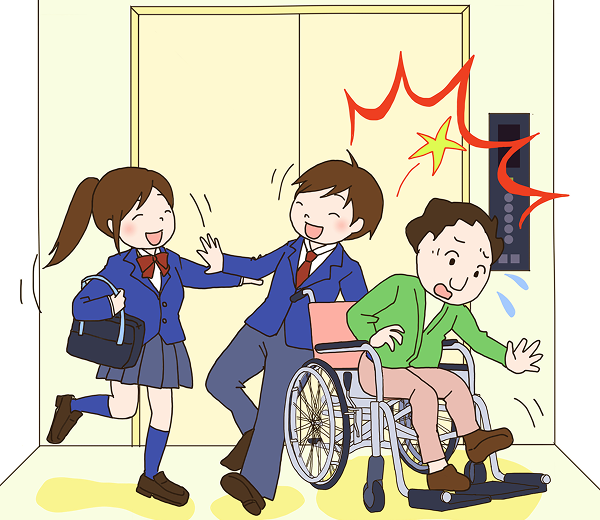
When riding together with a wheelchair user, people nearby should be careful not to push the wheelchair.
This may cause the wheelchair user to fall and be injured.
- 12
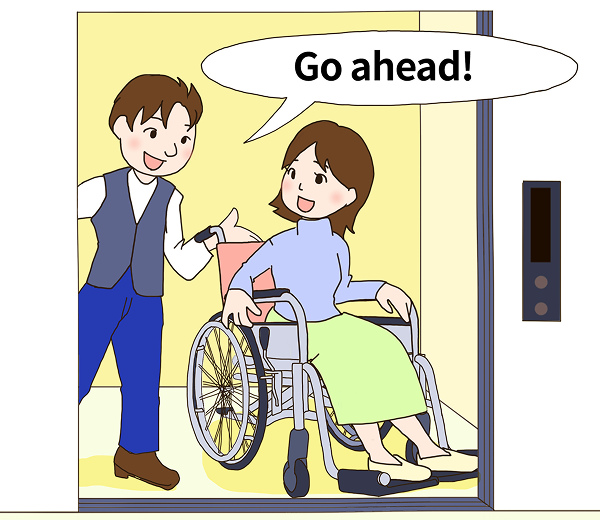
When boarding or exiting, please give priority to wheelchair users.
- 13
Please do not insert fingers or objects into gaps in the lighting, doors, fan openings, or any other openings.
Doing so could lead to injury or equipment failure.